
This article deals with crucial aspects of laser engraving eye protection. It outlines the types of laser safety eyewear available, their specific functions, and how to choose the right protection based on the wavelength of the laser used.
Table of Contents
Additionally, it covers safety standards and regulations, proper maintenance of protective eyewear, and common pitfalls to avoid.
Whether you’re a professional engraver or a hobbyist, this guide provides essential information to ensure your eyes are adequately protected from the potential hazards of laser engraving.
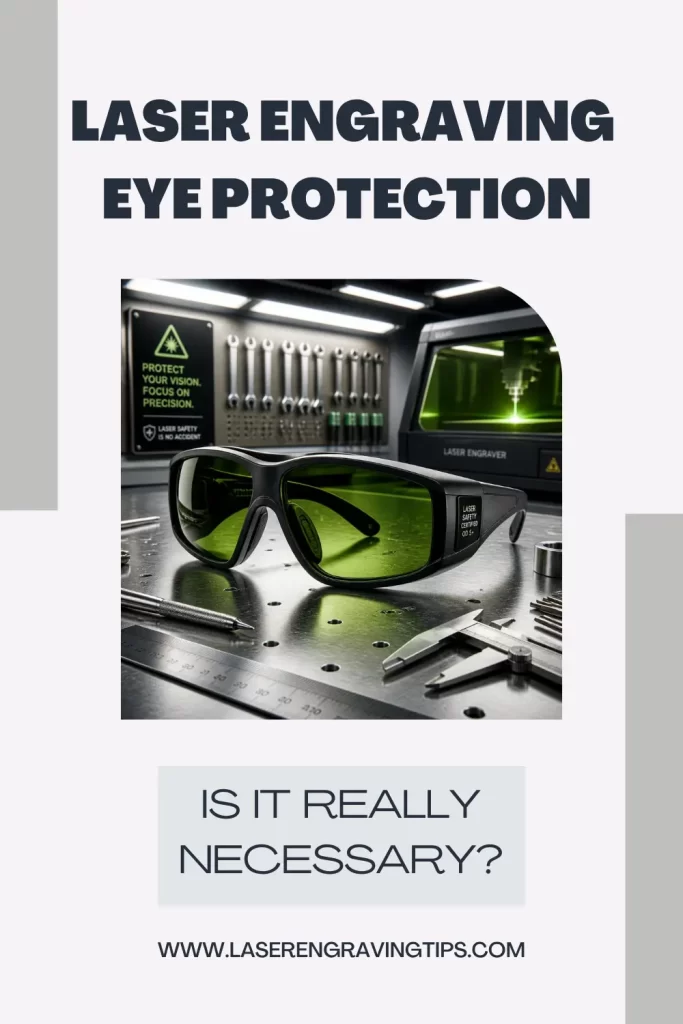
Is laser engraving eye protection really necessary?
Yes, laser engraving eye protection is essential. Laser engravers emit intense light that can be harmful to your eyes, even if you don’t immediately feel discomfort.
The risks include potential damage to the retina and cornea, which can lead to serious vision problems. Here’s why protection is crucial:
- Intensity of Laser Light: Laser engravers produce concentrated beams of light that can cause eye injuries. Even brief exposure can be dangerous, depending on the laser’s power and wavelength.
- Wavelength-Specific Protection: Different lasers operate at different wavelengths, so the protective eyewear must be designed to block the specific wavelengths emitted by your laser engraver.
- Accidental Exposure: Eye protection helps guard against accidental reflections or scattered laser light that might not be immediately visible but can still cause harm.
- Long-Term Safety: Regular use of proper eye protection reduces the risk of long-term damage, which might not be immediately apparent but can have serious consequences over time.
Investing in high-quality, appropriately rated laser safety glasses is a key step in ensuring your safety while working with laser engraving equipment.
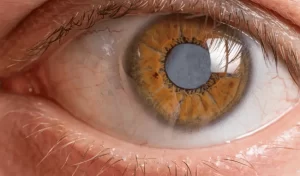
How Lasers Damage Your Eyes
1. Direct Beam Exposure
Looking directly at a laser beam—even for milliseconds—can instantly damage the retina.
2. Reflected Beams (Most Common Risk)
Highly reflective materials such as:
- Metal
- Glass
- Mirrors
- Polished surfaces
can redirect laser energy straight into your eyes at dangerous intensities.
3. Invisible Wavelength Danger
Some of the most dangerous lasers cannot be seen, including:
- 1064nm fiber lasers
- Infrared (IR) lasers
Your natural blink reflex offers no protection.
Laser Types and Required Laser Engraving Eye Protection
Different laser engravers emit specific wavelengths, and eye protection must be matched exactly to the laser type you are using. Wearing the wrong goggles can provide little to no protection, even if they are labeled “laser safe.”
Laser Type | Wavelength | Common Machines | Required Eye Protection |
|---|---|---|---|
Diode Laser | 445–455nm | xTool S1, D1, M1 | OD 4–6 @ 445nm |
CO₂ Laser | 10,600nm | xTool P2 / P2S / P3 | OD 5+ CO₂-rated goggles |
Fiber Laser | 1064nm | Fiber marking machines | OD 5+ @ 1064nm |
Infrared (IR) Laser | 1064nm | xTool S1 IR Module | OD 5+ IR-rated |
UV Laser | 355nm | UV marking & cold engraving lasers | OD 5+ @ 355nm (UV-rated) |
Never assume “laser goggles” are universal
Choosing the Right Laser Engraving Eye Protection
1. Understand the Wavelength: Determine the wavelength of the laser used in your engraver. Common wavelengths for laser engravers include 10600nm for CO2 lasers, 1064nm for Ndlasers, and various wavelengths for UV or fiber lasers. Choose eyewear that is specifically designed to filter out these wavelengths.
2. Optical Density (OD): Look for glasses with the appropriate Optical Density rating for your laser’s wavelength. The OD rating indicates how effectively the eyewear attenuates laser light. For example, a higher OD rating provides greater protection.
OD Rating | Energy Reduction |
|---|---|
OD 3 | 1,000× reduction |
OD 5 | 100,000× reduction |
OD 6 | 1,000,000× reduction |
OD 7 | 10,000,000× reduction |
3. Certification and Standards: Ensure the eyewear complies with safety standards and certifications such as ANSI Z136.1 (U.S.) or CE (European Union). These certifications ensure the eyewear meets rigorous safety and performance criteria.
4. Comfort and Fit: Since you may wear the glasses for extended periods, comfort is crucial. Choose glasses with an adjustable strap and a design that fits your face well without causing discomfort or obstructing your vision.
5. Lens Quality: High-quality lenses are essential for maintaining clear visibility while providing protection. Poorly made lenses can distort vision or reduce the effectiveness of the eyewear.
Best Laser Engraving Eye Protection Safety Glasses – Comparison Table
Choosing the right laser safety glasses depends on your laser type and wavelength. Using the wrong pair can leave you unprotected, so it’s important to match your goggles to your machine.
Here’s a clear comparison of some of the best options.
Model | Wavelength Protection | Optical Density (OD) | Best For | Key Advantage |
|---|---|---|---|---|
LaserPair Laser Safety Glasses Multi-Wavelength | 180–534nm, 740–900nm, 900–1095nm | OD 7+ (most ranges) | UV, Diode, IR, Fiber, Multi-laser setups | Wide spectrum coverage |
MCWlaser CO₂ Laser Safety Glasses 10600nm | 10600nm (CO₂) | OD 5+ | CO₂ lasers only | Dedicated CO₂ protection |
xTool Laser Safety Glasses | 316–450nm & 900–1080nm | OD 6+ | Diode, IR, fiber | Best all-around compatibility |
Quick Recommendations
- Best overall (most users): LaserPair Laser Safety Glasses Multi-Wavelength
Covers a wide range of wavelengths, ideal if you use different machines. - Best for CO₂ lasers: MCWlaser CO₂ Laser Safety Glasses 10600nm
Specifically designed for 10.6µm CO₂ lasers. Don’t substitute with general goggles. - Best for multi-laser environments: xTool Laser Safety Glasses
Great if you’re using diode, IR, or fiber lasers and want one reliable pair.
What Matters Most When Choosing
- Wavelength compatibility → must match your laser
- Optical Density (OD) → higher = better protection
- Comfort → important for long sessions
- Certification (EN207) → ensures real safety standards
The Best Laser Engraving Eye Protection
1. LaserPair Laser Safety Glasses – Best Multi-Wavelength Eye Protection

- Comprehensive Laser Protection Scope: Protection range covers 180-534nm O.D 7+ & 740-900nm O.D 5+ & 900-1095nm O.D 7+ wavelengths including 355nm, 405nm, 532nm, 740nm, 808nm, 980nm, and 1064nm laser light, suitable for Industrial, medical, commercial, scientific research, information, and other laser applications
The LaserPair Laser Safety Glasses Multi-Wavelength are built for users who need serious, wide-spectrum protection across multiple laser types. If you’re running different machines or working in a mixed setup, these are an excellent, versatile option.
Key Features
The biggest advantage is the broad wavelength coverage:
- 180–534nm (OD 7+)
- 740–900nm (OD 5+)
- 900–1095nm (OD 7+)
This means they protect against:
- UV and blue diode lasers
- Green lasers (532nm)
- Infrared and fiber lasers (1064nm)
It’s rare to find one pair that covers this range so well.
Safety and certification
These goggles are CE certified and meet EN207 standards, which is what you want for real laser safety.
They’re designed to handle:
- UV, Diode and IR engraving lasers
- ND:YAG and fiber lasers
- Tattoo removal and medical-grade systems
That level of certification adds confidence, especially in professional environments.
Comfort and design
- Wrap-around design for full eye coverage
- Ventilation system reduces fogging
- Lightweight and flexible for longer sessions
They’re built to be worn for extended periods without discomfort.
Compatibility
Works well with popular engraving machines like:
- xTool F1, F1 Ultra
- xTool S1, M1, D1 Pro
- Other UV, diode and IR-based systems
This makes them a strong choice for multi-laser setups
The LaserPair Laser Safety Glasses Multi-Wavelength are a great pick if you want one pair of goggles that covers almost everything.
With wide wavelength protection, strong certifications, and a comfortable design, they’re ideal for users who switch between different laser types and want reliable, all-around eye protection.
2. MCWlaser CO₂ Laser Safety Glasses (10600nm) – Best Eye Protection for CO₂ Lasers
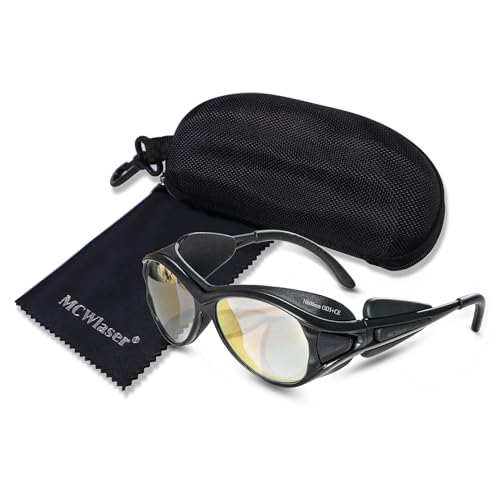
- Optical Density(OD) 5+, visible light transmittance(VLT) 80%.
The MCWlaser CO2 Laser Safety Glasses 10600nm are designed specifically for one job: protecting your eyes when working with CO₂ laser machines. If you’re using a 10.6µm laser, this is the kind of dedicated protection you want.
Key Features
These goggles are built for 10600nm wavelength protection, which is the standard for CO₂ lasers. With an Optical Density (OD) of 5+, they provide strong shielding against harmful laser exposure.
- Designed specifically for CO₂ engraving and cutting
- CE certified (EN 207:2017 standard)
- Helps prevent serious eye damage from reflected beams
This isn’t a general-purpose pair. It’s targeted protection for CO₂ users.
Visibility and comfort
Despite the high protection level, they maintain about 80% visible light transmission (VLT). That means:
- You can still clearly see your work
- No overly dark or tinted view
- Better control during engraving
The lightweight nylon frame also makes them comfortable for longer sessions.
- Fits over most prescription glasses
- Durable and impact-resistant
- Suitable for extended use
Best use cases
These goggles are ideal for:
- CO₂ laser engraving machines
- CO₂ laser cutters
- Laser-based beauty equipment
They’re not meant for diode, fiber, or IR lasers, so keep that in mind
The MCWlaser CO2 Laser Safety Glasses 10600nm are a focused, high-protection option for CO₂ laser users.
If you’re running a CO₂ machine, these offer the right combination of certified safety, clear visibility, and long-wear comfort. For this specific laser type, they’re a dependable choice you shouldn’t skip.
3. xTool Laser Safety Glasses – Best Laser Engraving Eye Protection
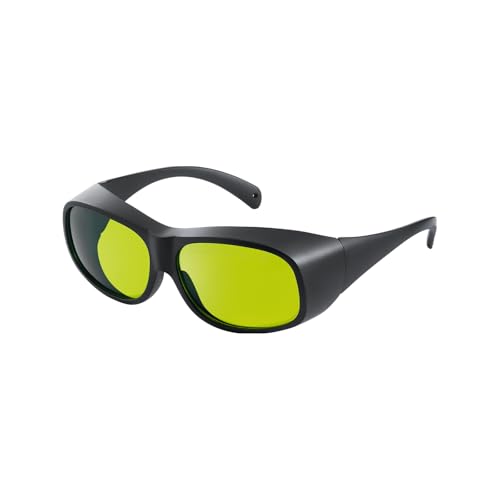
- Eye Protection: Effectively protects eyes from laser harm while keeping them comfortable.
The xTool Laser Safety Glasses are a reliable, all-in-one solution for protecting your eyes while working with laser engravers. If you’re using multiple laser types, these are the best option for their wide coverage and everyday comfort.
Key Features
The biggest advantage is their broad wavelength protection (316–450nm & 900–1080nm). That means one pair can safely cover:
- Diode lasers
- Infrared (IR) lasers
- Fiber lasers
- Select UV applications within range
They’re compatible with machines like xTool F1, F2, S1, M1, D1 Pro, and many other engravers, making them a great long-term investment.

Comfort and usability
At just 50g, these goggles are noticeably lightweight. You can wear them for long engraving sessions without discomfort.
- No bulky or heavy feel
- Less pressure on your face
- Ideal for extended use or batch jobs
Designed for real laser work
Unlike generic safety glasses, these are built specifically for laser environments. They strike a good balance between:
- Strong eye protection
- Enough visibility to monitor your engraving
That’s important when you need to keep an eye on your work without compromising safety
The xTool Laser Safety Glasses are a smart choice if you want dependable protection, comfort, and versatility in one pair.
If you’re running different types of lasers or plan to upgrade your setup, these goggles save you from needing multiple pairs. For most users, they’re an easy and worthwhile upgrade for workshop safety.
Enclosed vs Open Laser Engravers: Laser Engraving Eye Protection Safety Differences
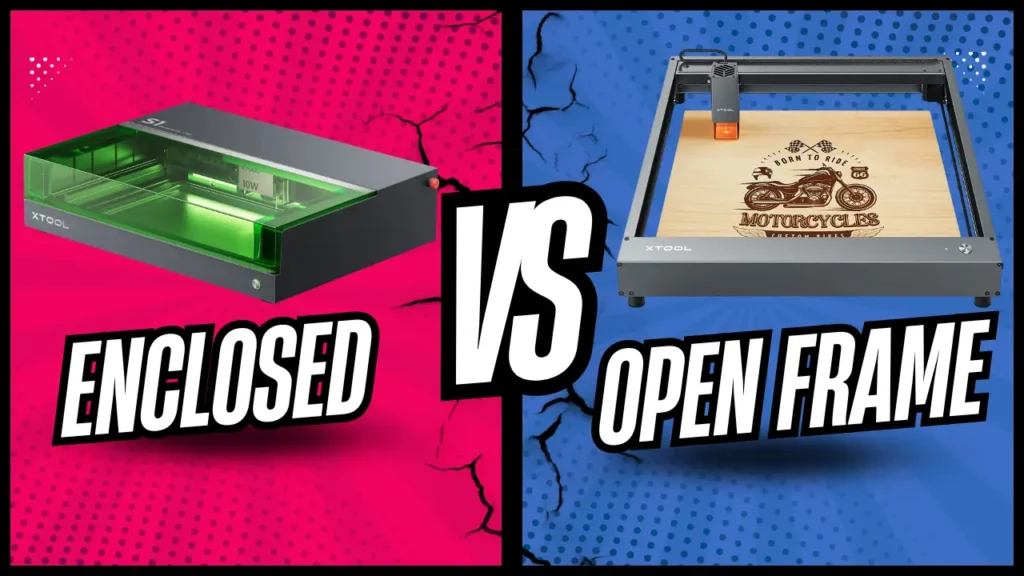
Enclosed Laser Engravers
Examples: xTool S1, P2S, F1 Ultra
Advantages:
- Built-in shielding
- Filtered viewing windows
- Reduced exposure risk
Still recommended:
- Wear eye protection during setup, focusing, or door-open operations
Open-Frame Laser Engravers
Examples: diode lasers without enclosures
Eye protection is mandatory at all times
- Operator
- Observers
- Anyone in the room
No exceptions.
Maintenance and Care
1. Regular Inspection: Regularly inspect your safety glasses for any damage or wear and tear. Replace any scratched or damaged lenses immediately to ensure continued protection.
2. Cleaning: Clean the lenses with a soft, lint-free cloth and a gentle lens cleaner to avoid scratching. Avoid abrasive materials or harsh chemicals that could damage the protective coating.
3. Storage: Store the glasses in a protective case when not in use to prevent damage from accidental impacts or scratches.
Common Pitfalls to Avoid
1. Using Incorrect Eyewear: Do not use general-purpose safety glasses or sunglasses, as they are not designed to protect against laser wavelengths. Always use eyewear specifically rated for laser protection.
2. Overlooking Wavelengths: Ensure the glasses match the specific wavelength of your laser. Using incorrect eyewear can lead to insufficient protection and increased risk of eye damage.
3. Ignoring Regulations: Follow all safety regulations and guidelines for laser use in your area. Compliance helps ensure that you and others are adequately protected while using laser engraving equipment.
Laser Engraving Eye Protection Best Practices
- Always wear certified laser goggles
- Match goggles to laser wavelength
- Keep beam paths controlled
- Avoid reflective materials when possible
- Use enclosures and shields
- Post laser warning signage
- Never look into the laser—even when “off”
Does the law require Laser Engraving Eye Protection?
In many regions:
- OSHA and ANSI standards require laser eye protection
- Businesses must provide certified PPE
- Insurance claims may be denied without safety compliance
Even hobbyists should follow professional safety standards.
Final Thoughts: Laser Engraving Eye Protection Is Non-Negotiable
Laser engravers are powerful tools—but your eyesight is irreplaceable.
The cost of proper laser eye protection is minimal compared to:
- Medical treatment
- Permanent vision loss
- Legal liability
If you operate a laser engraver, eye protection is the most important investment you can make.
Safety Rule to Remember:
If the laser is on, your eye protection should be on—every time
Frequently Asked Questions
Do I really need laser safety glasses when laser engraving?
Yes. Laser engraving can permanently damage your eyes in a fraction of a second. Even reflected or scattered laser light can cause retinal burns or long-term vision loss. Laser safety glasses are essential whenever the laser is exposed or the enclosure is open.
Are regular safety glasses or sunglasses enough for laser engraving?
No. Standard safety glasses and sunglasses do not block laser wavelengths. Laser safety eyewear is designed to filter specific laser wavelengths and power levels. Always use glasses rated for your laser’s exact wavelength range (diode, CO₂, fiber, or UV).
How do I choose the correct laser safety glasses?
Check your laser’s wavelength and power output, then choose eyewear rated for that range. For example:
Diode lasers: ~445–455nm
CO₂ lasers: 10,600nm
Fiber lasers: 1064nm
UV lasers: ~355nm
Look for goggles that clearly list wavelength protection and optical density (OD) ratings.
Do enclosed laser engravers still require eye protection?
Usually no—but with exceptions. Fully enclosed machines with certified laser-safe viewing windows do not require goggles during normal operation. However, eye protection is still recommended during:
Setup and alignment
Maintenance or troubleshooting
Operating with the enclosure open
Can one pair of laser safety glasses work for multiple laser types?
Sometimes. Some laser goggles cover multiple wavelength ranges, such as diode and infrared. However, not all glasses protect against CO₂ or UV lasers. Always confirm the listed wavelength range matches every laser you use to avoid unsafe exposure.