
Laser engraving is a powerful tool for creating intricate designs, logos, or text on various materials.
However, when it comes to engraving silver, there are specific considerations to take into account. So, can a laser engraver engrave silver?
Table of Contents
In this complete guide, you’ll learn which laser works best for silver, recommended settings, preparation tips, common mistakes, and professional finishing techniques to achieve crisp, permanent engravings.
Can Laser Engravers Engrave Silver?
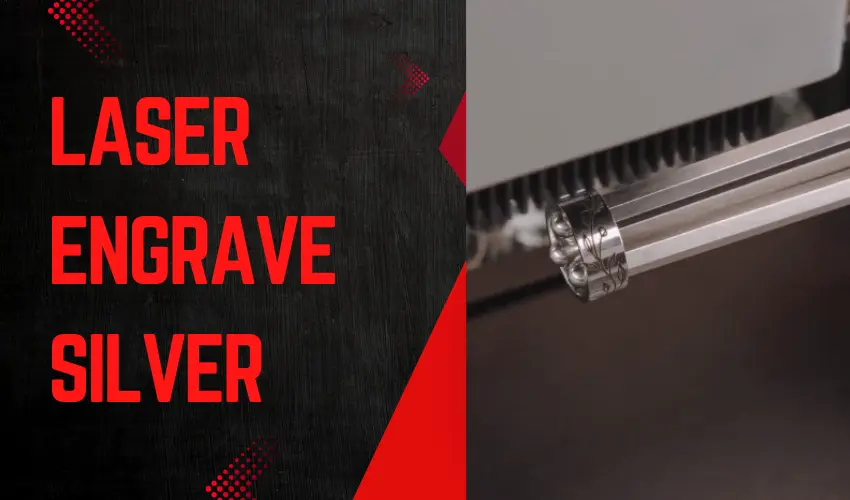
Yes, laser engravers can engrave silver, but the process depends on the type of laser used and the nature of the silver (e.g., sterling silver or pure silver).
Engraving silver can be challenging due to its high reflectivity and thermal conductivity, which can scatter the laser beam or dissipate heat quickly.
There was a time when engraving was an art limited to being done manually. Still, technological advancements have directed the transformation of the Manual engraving process to laser technology, also called laser engraving.
This highly accurate laser engraving technology can inscribe permanent markings on materials like silver, acrylics, and even glass.
Although the process of laser engraving remains integral to the automotive and aeronautics industry, engravers have gained massive popularity in other areas like jewelry designing, traceability, and identification.
The Best Types of Silver for Laser Engraving
The best types of silver for laser engraving are sterling silver and fine silver:
- Sterling Silver (92.5% silver, 7.5% copper): Durable and commonly used in jewelry and accessories. The copper alloy enhances strength and makes it easier to engrave.
- Fine Silver (99.9% pure): Softer and more delicate but engraves beautifully for intricate designs. Ideal for items where a high silver content is desirable.
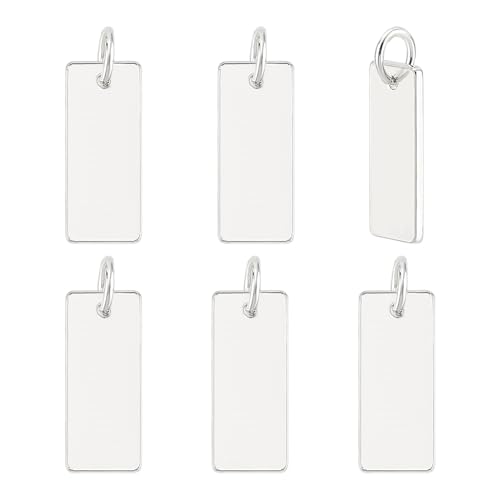
- Blank Stamping Pendant: You can add your favorite pattern and text by embossing or engraving, or engrave your name, birthday, anniversary, etc. to create your own unique pendant and make it memorable
What about Nickel Silver?
Nickel silver is not real silver. It is an alloy typically made of copper, nickel, and zinc, with no actual silver content. It gets its name from its silver-like appearance. While durable and corrosion-resistant, nickel silver is primarily used for decorative purposes and is not a substitute for genuine silver.
Best Laser Engraver To Engrave Silver
Engraving silver requires precision and the right type of laser to achieve clean and detailed results. Whether working with sterling silver or fine silver certain laser types excel at the task.
We explore the best laser types for engraving silver: Fiber lasers, UV lasers, and Infrared lasers.
Fiber Laser
Fiber lasers are among the most popular choices for engraving silver. They use a highly focused beam of light to etch intricate designs into metal surfaces.
Advantages of Fiber Lasers for Silver:
- High Precision: Fiber lasers can produce detailed engravings with exceptional clarity, making them ideal for intricate patterns and text.
- Speed and Efficiency: They operate at high speeds, reducing engraving time without compromising quality.
- Durability of Engraving: Fiber laser engravings on silver are permanent and highly resistant to wear and tear.
- Cost-Effective for Bulk Work: Fiber lasers are efficient for large-scale engraving projects, such as jewelry or custom silverware.
Best Applications:
- Jewelry engraving
- Custom silverware
- Industrial labeling on silver components
Recommended Fiber Laser To Engrave Silver: GWEIKE G2 Max 50W Fiber Laser Engraver

- INDUSTRIAL-GRADE ENGRAVING SPEED: The GWEIKE G2 Max 50W Fiber Laser Engraving Machine Is Equipped With A High-Speed Precision Galvanometer, Achieving An Engraving Speed Of Up To 15000 mm/s And An Accuracy Of 0.001 mm. Its Powerful Performance Significantly Enhances Work Efficiency. Supporting HD 8K Engraving Resolution, It Precisely Captures Every Detail, Delivering An Exceptional Engraving Experience.
The GWEIKE G2 Max 50W Fiber Laser Engraver is an excellent option for engraving silver because it combines the right wavelength, power, and precision needed to handle one of the most reflective and heat-conductive precious metals.
Here’s why it’s the best option:
Perfect Wavelength for Silver (1064nm Fiber Laser)
Silver reflects many laser wavelengths — especially CO₂ (10.6µm) and blue diode lasers.
A 1064nm fiber laser beam, however, is well absorbed by metals, including silver. This means:
- Efficient energy transfer
- Cleaner engraving results
- Reduced surface reflection issues
- Better depth control
This wavelength is specifically designed for metal marking and engraving.
50W Power = True Deep Engraving Capability
Silver dissipates heat quickly, making lower-powered machines struggle with depth.
With 50W of fiber laser power, the G2 Max can:
- Produce deep, permanent engravings
- Cut into silver for jewelry personalization
- Create bold logos and hallmarks
- Perform multi-pass deep engraving without excessive burn marks
Compared to 20W or 30W machines, 50W allows faster speeds and greater depth — ideal for production environments.
Exceptional Precision for Jewelry Work
Silver engraving often involves:
- Wedding bands
- Bracelets
- Charms
- Silverware
- Fine-detail logos
Fiber lasers like the G2 Max provide:
- Extremely fine beam focus
- Crisp edge definition
- High-resolution text and micro-details
This is especially important for:
- Script fonts
- Small serial numbers
- Intricate designs
High Speed for Business Efficiency
The G2 Max supports high engraving speeds (often up to 15,000 mm/s depending on settings).
This means:
- Faster production cycles
- Higher throughput
- More profitability per hour
For businesses engraving silver jewelry or giftware, speed directly impacts margins.
Minimal Heat Distortion
Because silver is highly conductive, poor laser settings can cause:
- Warping on thin jewelry
- Uneven marking
- Surface discoloration
A 50W fiber laser allows:
- Controlled energy application
- Adjustable frequency and pulse settings
- Cleaner engraving with less thermal damage
When properly tuned, the result is sharp engraving with minimal heat-affected zones.
Ideal for Both Surface Marking and Deep Engraving
With the right settings, the G2 Max can:
- Create high-contrast surface marks
- Perform deep engraving for heirloom-quality pieces
- Produce textured or 3D engraving effects
This versatility makes it suitable for:
- Jewelry personalization
- Custom silver gifts
- Industrial metal marking
- Branding and logo engraving
Why 50W Is Better Than 20W for Silver
Feature | 20W Fiber | 50W Fiber |
|---|---|---|
Deep Engraving | Limited | Excellent |
Speed | Moderate | Fast |
Production Work | Slower | Efficient |
Thick Silver Pieces | Challenging | Ideal |
For serious silver engraving — especially for business use — 50W provides greater flexibility and efficiency.
UV Laser
UV lasers have a shorter wavelength (around 355nm) compared to other laser types, making them an excellent choice for delicate engraving tasks.
Advantages of UV Lasers for Silver:
- Minimal Heat Impact: The short wavelength ensures less heat generation, which reduces the risk of thermal damage or discoloration on the silver surface.
- High Contrast Markings: UV lasers can create high-contrast engravings, particularly useful for decorative items or branding.
- Non-Contact Process: The laser beam doesn’t physically touch the silver, preserving its integrity and finish.
Best Applications:
- Engraving logos and intricate designs
- Personalizing fine silver items
- Decorative marking without damaging the material
Recommended UV Laser To Engrave Silver: xTool F2 Ultra UV 5W UV Laser Engraver
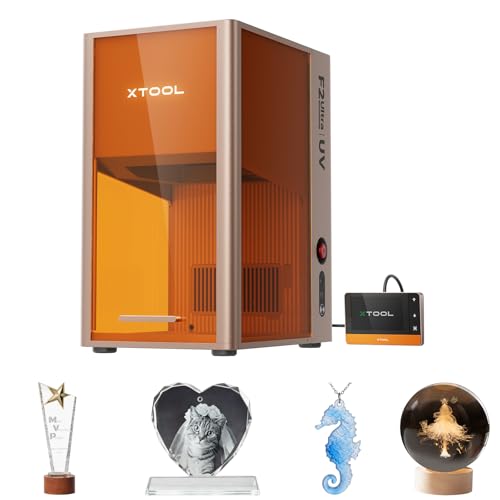
- Master of Glass Engraver: xTool F2 Ultra UV laser engraver machine delivers the simplest solution for 3D engraving inside glass and crystal with flawless results. This versatile UV laser engraver excels at surface engraving, embossing, cutting, and rotary engraving with premium results. Perfect for creating custom wine bottles, 3D crystal trophies, and personalized glass gifts for any occasion
The xTool F2 Ultra UV 5W UV Laser Engraver is an excellent option for engraving silver because UV laser technology interacts with metal very differently than traditional fiber systems.
If your goal is ultra-fine detail, clean surface marking, and premium jewelry finishes, this machine offers some serious advantages.
Here’s why it’s an excellent option for silver engraving:
UV Wavelength = High Absorption on Silver
Silver is highly reflective, which makes many lasers inefficient.
The F2 Ultra’s 355nm UV wavelength is absorbed more effectively by reflective metals than visible or infrared light. This results in:
- Cleaner surface interaction
- Reduced reflection issues
- Greater marking consistency
- Less need for excessive power
UV lasers are especially good at controlled surface marking rather than heavy material removal.
“Cold Marking” Minimizes Heat Damage
UV lasers are often called “cold lasers” because they:
- Use shorter pulses
- Transfer energy in a more controlled way
- Create minimal heat-affected zones
For silver jewelry, this means:
- Less warping on thin rings or pendants
- Minimal discoloration
- Reduced risk of melting delicate details
- Cleaner engraving on polished surfaces
This is ideal for fine jewelry and luxury personalization.
Exceptional Micro-Detail Capability

A 5W UV laser produces:
- Extremely fine beam spot size
- High-resolution engraving
- Crisp micro text and intricate designs
Perfect for:
- Wedding band inscriptions
- Hallmarks and purity stamps
- Serial numbers
- Ultra-detailed logos
- Decorative filigree patterns
If your work requires precision over depth, UV excels.
Excellent Surface Contrast on Polished Silver
Silver jewelry is often highly polished.
UV lasers can produce:
- High-contrast matte marks
- Smooth, refined textures
- Clean engraving on mirror-finish surfaces
This makes it ideal for luxury gift engraving and branding.
That versatility makes it a powerful all-in-one solution for jewelers.
Safe and Efficient for Small-Batch Production
For jewelers or personalization businesses:
- Fast marking speeds
- High repeatability
- Precise positioning
- Minimal post-processing
UV engraving often requires less polishing afterward compared to deeper fiber engravings.
When UV Is Better Than Fiber for Silver
Use Case | UV 5W | Fiber 50W |
|---|---|---|
Micro text | Excellent | Very good |
Deep engraving | Limited | Excellent |
Thin jewelry | Excellent | Good (needs tuning) |
Surface marking | Premium | Strong |
Heat-sensitive work | Excellent | Moderate |
If you want deep carving, fiber wins.
If you want precision, detail, and minimal heat impact — UV shines.
Infrared Laser
Infrared lasers, operating at wavelengths around 1064nm, are another excellent option for engraving silver. They are highly versatile and can handle various metal surfaces, including silver.
Advantages of Infrared Lasers for Silver:
- Versatility: Infrared lasers are effective on multiple types of silver, from sterling to silver-plated items.
- Moderate Heat Generation: While not as low-heat as UV lasers, they can still achieve clean engravings with minimal distortion.
- Cost-Effective for Mid-Scale Projects: Infrared lasers strike a balance between precision and affordability, making them suitable for small to medium-sized operations.
Best Applications:
- Personalized gifts
- Engraving logos on silver plaques
- Functional markings (e.g., serial numbers or barcodes)
Recommended Infrared Laser To Engrave Silver: xTool F2 5W IR & 15W Diode Portable Dual Laser Engraver
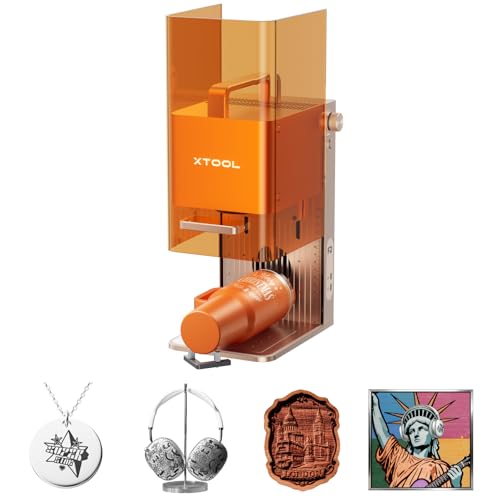
- Dual-Laser Versatility, Endless Creation: Our 15W Diode & 5W IR dual-laser combo makes this laser engraver truly versatile, unlocking more possibilities on 300+ materials. The 5W IR delivers deep, dark, vivid color marking on metal, while the 15W diode expertly handles 3D embossing and cutting through thick materials.

The xTool F2 5W IR & 15W Diode Portable Dual Laser Engraver is a great option for silver engraving because it combines infrared (IR) metal-marking capability with diode versatility in a compact, portable system.
For creators who want to engrave silver without investing in a full industrial fiber laser, it offers an excellent balance of performance and flexibility.
Here’s why it works so well:
1064nm IR Laser Designed for Metal
Silver is highly reflective and difficult to engrave with standard blue diode lasers.
The F2’s 5W infrared (1064nm) laser is specifically designed for metals, including:
- Silver
- Gold
- Stainless steel
- Brass
This wavelength is absorbed much better by metal surfaces, allowing:
- Direct engraving without marking spray
- Clean, permanent marks
- Better contrast on polished silver
For silver engraving, the IR module is the key advantage.
Clean Surface Marking for Jewelry
The 5W IR laser is ideal for:
- Ring inscriptions
- Pendant personalization
- Silverware engraving
- Logos and branding
It produces:
- Fine detail
- Crisp text
- Minimal surface distortion
While it’s not built for extremely deep engraving like a 50W fiber laser, it excels at professional-quality surface marking.
Minimal Heat Impact on Thin Silver
Silver conducts heat quickly, which can cause issues with higher-powered systems if not tuned correctly.
The lower-power IR system:
- Applies controlled energy
- Reduces risk of warping thin jewelry
- Minimizes heat-affected zones
- Maintains polished finishes
This makes it suitable for delicate pieces like wedding bands and charms.
Dual-Laser Versatility

The biggest strength of the F2 is that it combines:
- 5W IR laser → for metal engraving
- 15W diode laser → for wood, leather, acrylic, coated materials
This means you can:
- Engrave silver jewelry
- Cut and engrave packaging
- Create wooden display boxes
- Personalize gift sets
For small businesses, this versatility reduces the need for multiple machines.
Portable & Business-Friendly Design
Unlike large fiber laser systems, the F2 is:
- Compact
- Portable
- Desktop-friendly
- Easier to integrate into small workshops
This makes it ideal for:
- Etsy sellers
- On-demand personalization businesses
- Craft fairs
- Small studios
Great Entry Point for Metal Engraving
If you’re not ready to invest in a high-power fiber laser, the F2 offers:
- Affordable metal engraving capability
- Beginner-friendly setup
- Professional-quality surface marking
- Low learning curve
It’s a strong middle-ground solution between hobby diode machines and industrial fiber systems.
When It’s the Best Choice
The xTool F2 is ideal if you want:
- Surface engraving on silver
- Jewelry personalization
- Portable metal engraving
- Multi-material capability in one machine
If your goal is deep carving into thick silver, a higher-wattage fiber laser would be better. But for clean, detailed, surface-level engraving, the IR module performs very well.
Best Laser Engraver To Engrave Silver – Comparison Table
Machine | Laser Type | Power | Best For | Deep Engraving | Surface Marking |
|---|---|---|---|---|---|
GWEIKE G2 Max 50W Fiber Laser Engraver | Fiber (1064nm) | 50W | Professional silver engraving & production | ⭐⭐⭐⭐⭐ Excellent | ⭐⭐⭐⭐⭐ Excellent |
xTool F2 Ultra UV 5W UV Laser Engraver | UV (355nm) + Fiber | 5W UV (+ fiber module) | Ultra-fine detail & luxury jewelry | ⭐⭐⭐ Moderate | ⭐⭐⭐⭐⭐ Premium |
xTool F2 5W IR & 15W Diode Portable Dual Laser Engraver | IR (1064nm) + Diode | 5W IR + 15W Diode | Small business & portable metal marking | ⭐⭐ Light depth | ⭐⭐⭐⭐ Very Good |
Which One Should You Choose?
Choose GWEIKE G2 Max 50W Fiber if:
- You need deep engraving in silver
- You run a jewelry production business
- You want maximum speed and efficiency
- You engrave thick silver pieces
Best overall for serious silver engraving.
Choose xTool F2 Ultra UV if:
- You engrave delicate or luxury silver jewelry
- You need ultra-fine micro detail
- You want minimal heat impact
- Surface precision matters more than depth
Best for high-end jewelry and intricate detail work.
Choose xTool F2 (IR + Diode) if:
- You want an affordable metal engraving solution
- You engrave mostly surface-level designs
- You need portability
- You work across multiple materials
Best entry-level metal engraving option.
Key Takeaway
For silver engraving, the most important factor is laser wavelength:
- Fiber (1064nm) → Best for deep engraving & production
- UV (355nm) → Best for fine detail & minimal heat
- IR 1064nm (low wattage) → Best for surface marking & portability
- CO₂ & standard diode alone → Not recommended for bare silver
By selecting the right laser type, you can achieve professional-quality results and bring your silver engraving projects to life. Whether you’re crafting personalized jewelry, marking industrial components, or creating decorative pieces, these laser types offer the tools you need for stunning outcomes.
How To Laser Engrave Silver
Laser engraving on silver works by using a focused beam of light to vaporize or remove a thin layer of the silver’s surface, creating a permanent, detailed mark. Here’s a breakdown of the process:
- Type of Laser: Fiber lasers are the most effective for engraving silver due to their high power and precision.
- Preparation: The silver surface is cleaned to remove dirt or oils that could interfere with the laser’s accuracy.
- Engraving Process:
- The laser emits a concentrated light beam with enough energy to impact the silver’s surface.
- The beam is guided by design software to follow precise patterns, texts, or images.
- The laser’s heat causes the silver to vaporize, leaving behind engraved marks.
- Control Settings: Factors such as laser power, speed, and focus are adjusted to ensure optimal results without damaging the silver.
- Post-Engraving: The engraved surface may be cleaned to remove residue, enhancing the final appearance.
This method allows for intricate designs with excellent durability, making it ideal for jewelry, plaques, and personalized gifts.
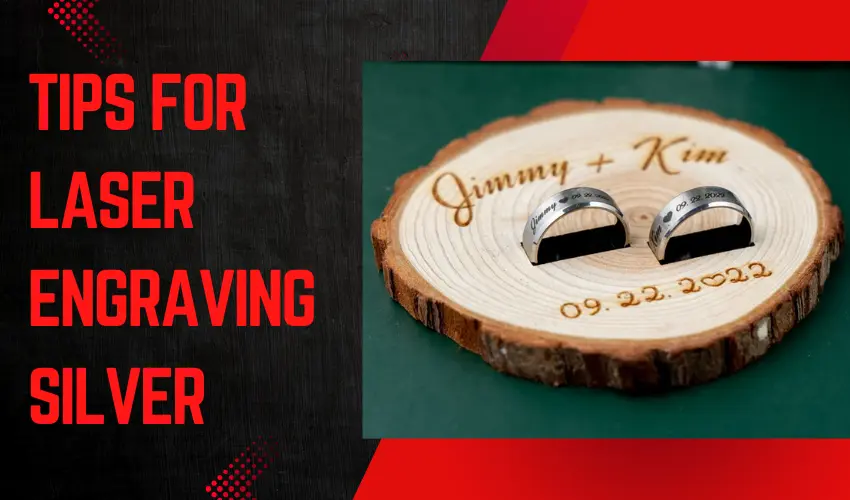
Tips for Laser Engraving Silver
Clean the Surface
Before engraving, ensure the silver is clean and free from dirt or oil. A clean surface allows the laser to interact with the material effectively.
Remove oils, fingerprints, and polishing residue using:
- Isopropyl alcohol
- Microfiber cloth
Contaminants can cause uneven engraving.
Secure the Workpiece
Use:
- Rotary attachment (for rings or bracelets)
- Flat jig or honeycomb table
Movement during engraving ruins precision.
Use Proper Focus
Set the laser to the correct focal distance to ensure precision and avoid blurry or inconsistent marks.
Adjust Settings
- Power: Use higher power settings for deep engravings.
- Speed: Lower speeds can result in deeper engravings, while higher speeds work for surface marking.
- Frequency: Optimize the frequency to match the laser type and silver material.
Recommended Starting Laser Settings for Engraving Silver
Fiber Laser (1064nm) – Best for Deep Engraving
Ideal for: Sterling silver (925), fine silver, thick jewelry, deep engraving.
Surface Marking (Clean Logo / Text)
- Power: 20–35% (50W machine)
- Speed: 1200–2000 mm/s
- Frequency: 30–60 kHz
- Passes: 1–2
- Hatch spacing: 0.03–0.05 mm
Deep Engraving
- Power: 70–90% (50W machine)
- Speed: 300–800 mm/s
- Frequency: 30–50 kHz
- Passes: 5–20 (depending on depth)
- Hatch spacing: 0.02–0.04 mm
UV Laser (355nm) – Best for Fine Detail
Ideal for: Luxury jewelry, micro text, delicate pieces.
UV lasers create minimal heat impact and are excellent for surface marking.
Precision Surface Engraving
- Power: 60–85% (5W UV)
- Speed: 800–1500 mm/s
- Frequency: 20–40 kHz
- Passes: 1–3
- Hatch spacing: 0.02–0.04 mm
Infrared (IR) Laser – 1064nm (5W Portable Systems)
Ideal for: Surface marking, portable engraving, light personalization.
Light Surface Marking
- Power: 80–100% (5W IR)
- Speed: 500–1500 mm/s
- Frequency: 20–50 kHz
- Passes: 1–3
- Hatch spacing: 0.03–0.05 mm
Use Hatch Settings
Cross-hatching improves depth consistency and clarity.
Control Heat
Silver dissipates heat quickly — slower speeds improve depth.
Polish After Engraving
Light polishing enhances contrast and removes residue.
Test on Scrap Material
Always test your settings on a piece of scrap silver to avoid errors on the final piece.
Common Mistakes to Avoid
- Using a CO₂ laser on bare silver
- Skipping surface cleaning
- Engraving without test runs
- Overpowering thin silver jewelry (can warp pieces)
In Conclusion
Laser engraving silver is entirely achievable — and extremely profitable — when using the correct equipment.
If you want:
- Deep, permanent engraving → Fiber laser
- Ultra-fine detail → UV laser
- Budget marking solution → Infrared laser
With proper preparation, optimized settings, and testing, you can create stunning, high-value silver engravings that last a lifetime.
Frequently Asked Questions
Can you laser engrave real silver?
Yes, you can laser engrave real silver — including sterling silver (925) and fine silver — but you need the right type of laser.
The best options are:
Fiber lasers (1064nm) → Ideal for deep engraving
UV lasers (355nm) → Best for fine detail and surface marking
IR lasers (1064nm, lower wattage) → Good for light marking
What is the best laser for engraving silver?
A 50W fiber laser is generally considered the best overall option for engraving silver because it provides:
Deep engraving capability
Fast production speeds
Clean, permanent marks
High precision
If your focus is delicate jewelry or micro-detail, a UV laser can also be an excellent choice.
Why is silver difficult to engrave?
Silver is challenging because it is:
Highly reflective
Extremely heat-conductive
Reflection can reduce laser efficiency, and heat conductivity spreads energy quickly, making it harder to achieve deep engraving without sufficient power.
Do I need marking spray to engrave silver?
No — not if you are using a fiber, IR, or UV laser designed for metal.
Can you deep engrave silver with a laser?
Yes, but only with sufficient power.
For deep engraving:
20W fiber → Light to moderate depth
30W fiber → Good depth
50W fiber → Excellent deep engraving