
UV laser engraving is revolutionizing the way we mark and personalize products across a wide range of industries.
Unlike CO₂ or fiber lasers, UV lasers use short-wavelength ultraviolet light to achieve ultra-fine, non-contact, low-heat marking.
This precision and versatility make UV laser engraving ideal for delicate materials and highly detailed engravings.
Table of Contents
In this complete guide, we’ll break down how UV laser engraving works, what materials it’s best for, key benefits, and what to look for when buying a UV laser machine.
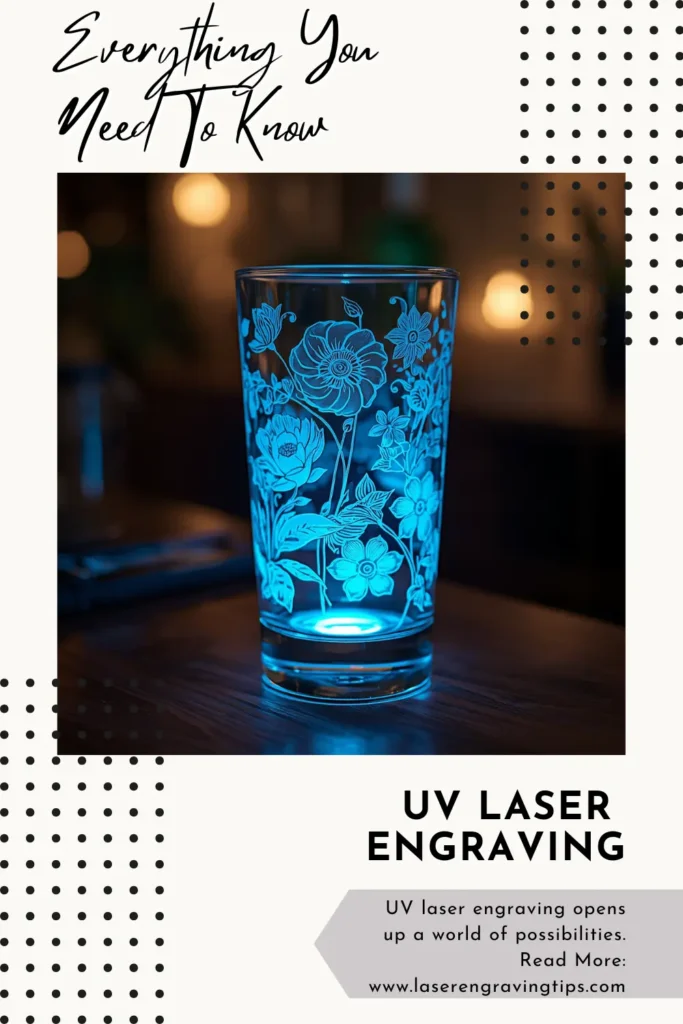
What Is UV Laser Engraving?
UV (ultraviolet) laser engraving uses a 355nm wavelength laser—a much shorter wavelength than fiber (1064nm) or CO₂ lasers (10.6μm).
This shorter wavelength produces what’s known as “cold light,” which minimizes heat-affected zones and allows for high-precision marking without damaging or melting the material.
UV lasers are a form of solid-state laser that use frequency tripling (3X) to convert infrared light to ultraviolet. This makes them ideal for intricate, high-contrast, and ultra-fine engraving on a broad range of materials.
What Materials Can UV Lasers Engrave?

Plastics
UV lasers are particularly well-suited for marking most types of plastic because they won’t warp, melt, or burn the surface like fiber or CO₂ lasers.
Common plastic types UV lasers can engrave:
- ABS (With Good Ventilation) – for electronics, housings
- Polycarbonate (PC) – used in firearm components, lenses
- Polyamide (PA or Nylon) – durable, used in automotive and tools
- PET / PETG – common in packaging and ID cards
- POM (Delrin®) – engineering-grade thermoplastic
- Polypropylene (PP) – used in medical and food containers
- PE (Polyethylene) – including foam PE and HDPE
- PES film – transparent film used in electronics and overlays
- Polyimide (PI) – great for circuit boards and flexible electronics
Applications:
Barcodes, logos, product labels, medical instruments, and consumer electronics.
Metals
Although fiber lasers are the industry standard for metal, UV lasers can mark many metals, especially coated or sensitive parts.
Metals UV lasers can mark:
- Aluminum (especially anodized)
- Stainless steel
- Brass
- Titanium
- Gold, Silver, Platinum (for fine jewelry)
- Nickel & Chrome-plated materials
Important: UV lasers are better for surface-level marking, not deep engraving. They are ideal for high-precision text, serials, and decorative logos.
Glass and Crystal
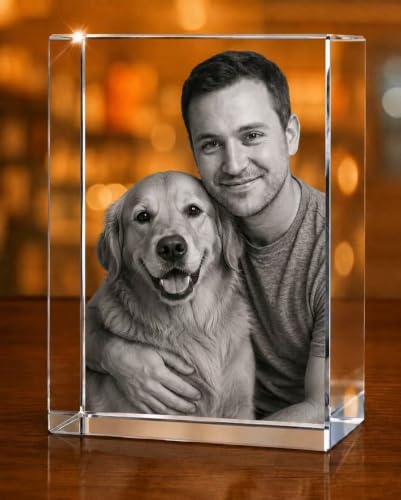
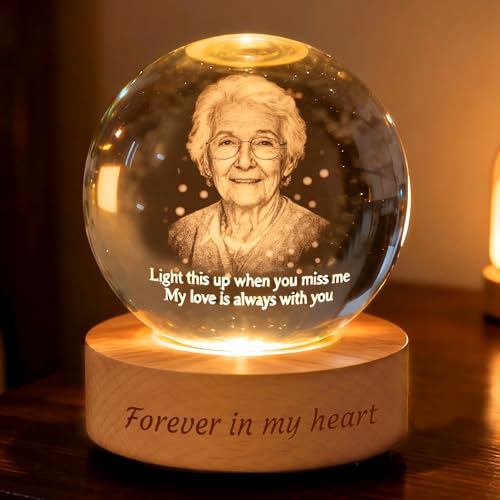
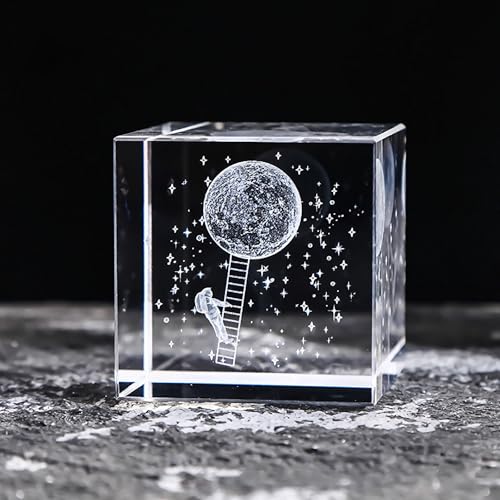
One of the biggest strengths of UV lasers is their ability to engrave glass without cracking, and inside crystal to create intricate logos and stunning three-dimensional images without damaging the surface.
Applications:
- Custom drinkware (wine glasses, tumblers)
- 3D Crystal Engraving
- Awards and trophies
- Smartphone screens
- Optical components
Why UV lasers are best for glass:
They produce no thermal stress—so no chipping or spider cracking, and no need for coating or masking.
Ceramics and Stone
UV lasers can engrave some light ceramic surfaces and delicate stones like marble or tiles.
Applications:
- Electrical insulators
- Ceramic knives and tools
- Decorative tiles
Note: The engraving is often surface-level and not as deep as with CO₂ or fiber lasers.
PCBs and Electronic Components
UV lasers can precisely engrave printed circuit boards (PCBs) and other electronics.
Benefits:
- Doesn’t damage internal circuitry
- Perfect for micro-text, QR codes, and UID marking
- Can mark flexible PCBs and polyimide tapes
Cardboard and Paperboard
UV lasers can lightly engrave or cut thin paper-based products without burning.
Applications:
- Security labels
- Packaging prototypes
- Custom stationery and cards
What UV Lasers Should NOT Engrave
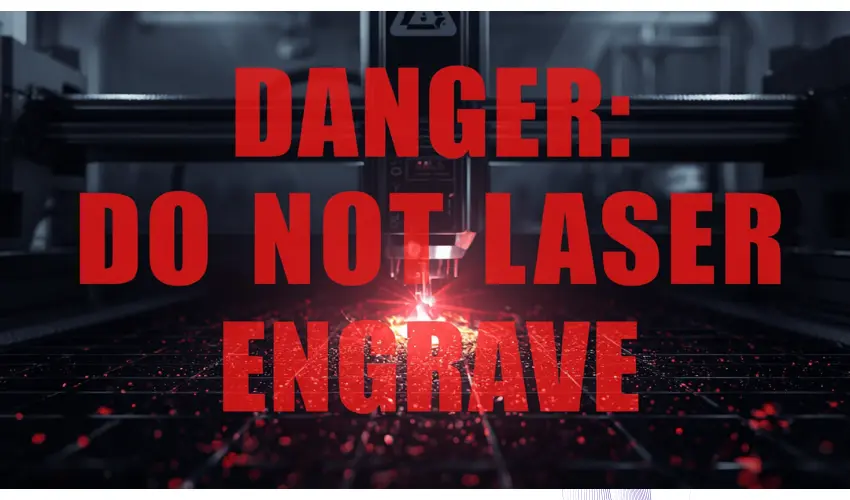
While UV lasers are versatile, there are limitations:
PVC (Polyvinyl Chloride)
Reason: Releases toxic and corrosive gases
- Produces hydrogen chloride (HCl) and chlorine compounds
- Damages optics, rails, and electronics
- Serious respiratory hazard
- Not made safe by UV wavelength
Verdict: Never engrave PVC (home or desktop use)
Vinyl (Most Sign Vinyl & “Craft Vinyl”)
Reason: Often PVC-based
- Same chlorine outgassing as PVC
- Frequently mislabeled or unclear composition
Verdict: Unsafe unless explicitly labeled PVC-free
PTFE (Teflon)
Reason: Releases highly toxic fluorinated gases
- Can produce compounds similar to phosgene gas when decomposed
- Extremely dangerous even in small amounts
Verdict: Do not laser engrave
Polyurethane (PU) – Some Types
Reason: Can release cyanide-related fumes
- Composition varies widely
- Some PU foams and coatings are hazardous
Verdict: Avoid unless manufacturer confirms laser safety
ABS (Without Verified Ventilation)
Reason: Toxic fumes and soot
- Emits styrene and other harmful vapors
- Leaves sticky residue on optics
Verdict: Only engrave with industrial-grade ventilation
Epoxy Resins & Fiberglass (G10, FR4)
Reason: Toxic and abrasive byproducts
- Releases harmful gases
- Fiberglass dust damages machines and lungs
Verdict: Never engrave
Carbon Fiber (Unsealed)
Reason: Conductive & hazardous dust
- Releases airborne conductive fibers
- Can short electronics
Verdict: Not safe for UV laser engraving
Unknown Plastics
Reason: Unpredictable chemistry
- May contain chlorine, fluorine, or toxic additives
Verdict: If you don’t know what it is — don’t engrave it
Painted or Coated Surfaces (Unknown Paint)
Reason: Toxic pigments and binders
- Lead, chromium, or solvent-based paints
- Dangerous fumes when vaporized
Verdict: Strip or verify coating before engraving
Quick Reference Table
Material | Engraving Type | Precision | Notes |
|---|---|---|---|
ABS With Ventilation / Plastic Housing | High-contrast surface marking | ⭐⭐⭐⭐⭐ | No melting or discoloration |
Polycarbonate (PC) | Text, logos, micro text | ⭐⭐⭐⭐ | UV is safer than CO₂ for PC |
Anodized Aluminum | Clean marking | ⭐⭐⭐⭐⭐ | Crisp white-on-black contrast |
Stainless Steel | Light surface marking | ⭐⭐⭐ | Best with blackening effect, not deep |
Glass | Frosted look, no cracks | ⭐⭐⭐⭐⭐ | Perfect for awards and custom gifts |
Crystal | 3D images and logos | ⭐⭐⭐⭐⭐ | Beautiful custom gifts |
PCB / Polyimide | Precision UID / QR codes | ⭐⭐⭐⭐⭐ | Electronics safe, no heat damage |
PET / PP / PE | Labeling | ⭐⭐⭐⭐ | Used in bottles, packaging |
Brass / Gold / Silver | Logos, jewelry customization | ⭐⭐⭐⭐ | Fine detail without scratching |
Ceramic | Surface logos and text | ⭐⭐⭐ | Smooth finishes only |
Advantages of UV Laser Engraving
Cold Marking Process
- Prevents material deformation, burns, or melting
- Essential for plastics, glass, and sensitive electronics
High Precision & Detail
- Excellent for QR codes, micro text, and fine graphics
- Achieves resolutions up to 2400+ DPI
Versatility
- Works on a broader range of materials than CO₂ or fiber alone
- Perfect for niche markets like jewelry, medical tools, and PCB manufacturing
Minimal Post-Processing
- Clean marks reduce the need for wiping, sanding, or cleaning
Limitations of UV Laser Engraving
- Higher cost than CO₂ or fiber lasers
- Lower wattage (5W–10W) means it’s not ideal for deep engraving or cutting
- Slower engraving speeds for some materials
- Requires eye protection due to the UV wavelength
Applications of UV Laser Engraving
UV lasers are used in:
- Medical tools & devices (permanent, sterile marking)
- Electronics and circuit boards (non-invasive labeling)
- Cosmetic and personal care packaging (on soft plastics)
- Jewelry and watchmaking (ultra-fine detailing)
- Custom gifts & promotional products (3D Crystal, glassware, pens, etc.)
- Firearms and tactical gear (polymer frame engraving)
What To Look For in a UV Laser Engraving Machine
When shopping for a UV laser engraver, consider:
Feature | Importance |
|---|---|
Laser Power | 5W for marking, 5 – 10W for broader capability |
Focusing System | Electric Z-axis/lifting column is ideal |
Software Compatibility | EZCAD, XCS, and LightBurn |
Rotary Option | For engraving on cylindrical items |
Cooling Method | Air-cooled is best for low-maintenance use |
Precision Level | Look for engraving accuracy around 0.0019mm |
Recommended UV Laser Engraving Machine
xTool F2 Ultra UV 5W UV Laser Engraving Machine

The xTool F2 Ultra UV is a professional-grade 5W UV laser engraver designed for ultra-fine, heat-free engraving on delicate and transparent materials.
Using a 355nm ultraviolet wavelength, it produces “cold engraving,” meaning virtually no burning, melting, or heat distortion—something diode, CO₂, and fiber lasers cannot achieve.
What makes it special is its ability to perform true 3D inner-crystal engraving, creating floating designs inside the crystal without damaging the surface.
Key Highlights
- 355nm + 405nm UV laser for micro-precision (0.02–0.03mm detail)
- Up to 15,000 mm/s galvo engraving speed
- Autofocus with LiDAR for automatic height detection
- Dual 48MP cameras for accurate positioning and live preview
- Fully enclosed design with Class 1 or Class 4 safety options
- Portable and compact, ideal for studios, retail, and events
Best Uses
- 3D crystal engraving
- Excellent surface engraving on glass
- Fine marking on plastics, ceramics, leather, PCBs, and wood
- High-detail jewelry, barcodes, QR codes, and micro text
- Clean engraving with no burn marks or melting
Why It Outperforms Other Lasers for Glass
- CO₂ lasers chip and crack glass
- Diode lasers reflect off glass and need coatings
- UV laser (355nm) passes through glass and engraves internally with precision
The xTool F2 Ultra UV is one of the most advanced desktop UV laser engravers available, especially for glass, crystal, and fine-detail work.
If your focus is precision, clean finishes, and true internal crystal engraving, this machine is in a class of its own.
UV Laser Engraving vs. Fiber vs. CO₂: Quick Comparison
Feature | UV Laser | Fiber Laser | CO₂ Laser |
|---|---|---|---|
Wavelength | 355 nm | 1064 nm | 10,600 nm |
Best For | Plastics, glass, crystal, electronics | Metals, plastics | Wood, acrylic, leather |
Heat Impact | Low (cold light) | Medium | High |
Precision | Very High | High | Medium |
Cutting Ability | Low | High (on metals) | High (on non-metals) |
Price | Higher | Medium–High | Low–Medium |
What is the difference between IR and UV Laser Engraving
The main difference between infrared (IR) and ultraviolet (UV) lasers comes down to wavelength—and that affects what materials they work best with and how they’re used.
In simple terms:
- Infrared lasers have longer wavelengths and are great for engraving metals and hard plastics.
- UV lasers have shorter wavelengths and are better for fine, detailed work on lots of different materials—with almost no heat involved.
Why UV Lasers Are So Precise
UV lasers send out small, highly focused bursts of energy. This lets them remove tiny amounts of material very accurately, almost at the molecular level, without heating or damaging the area around it.
That’s a big deal when you’re working on heat-sensitive materials like glass, plastic, or microchips.
Final Thoughts: Is a UV Laser Engraver Right for You?
If you need high-precision, low-impact engraving on plastics, glass, coated metals, electronics, or 3D crystal engraving, a UV laser is an excellent investment.
While the initial cost may be higher than that of fiber or CO₂ systems, the versatility, detail, and clean results more than justify the price—especially for professionals in the medical, electronics, or 3D crystal gifts and branding industries.
Whether you’re a hobbyist upgrading your shop or a business looking for scalable marking solutions, UV laser engraving opens up a world of possibilities.
Frequently Asked Questions
What is a UV laser engraver, and how is it different from CO₂ or fiber lasers?
A UV laser engraver uses a short-wavelength ultraviolet laser (typically 355nm) to mark or engrave materials using a “cold marking” process, which minimizes heat damage. This sets it apart from CO₂ (10.6μm) and fiber lasers (1064nm), which generate more heat. UV lasers are ideal for heat-sensitive materials like plastics, glass, and electronics, whereas CO₂ is best for organics (wood, acrylic) and fiber for metals.
What materials can UV lasers engrave or mark?
UV lasers can engrave an incredibly wide range of materials with high precision. Common materials include:
Plastics: ABS, PET, PC, POM, PVC, PP, Nylon
Metals: Aluminum, stainless steel, titanium, gold, silver (light surface marking)
Non-metals: Glass, ceramic, paper, wood, leather, fabric
Electronics: Polyimide (PI), circuit boards, microchips
Their ability to engrave with almost no thermal distortion makes them ideal for medical devices, ID cards, and electronics.
Is a UV laser safe to use indoors?
Yes, UV lasers are safe to use indoors when proper safety measures are followed. Always:
Use protective laser safety goggles rated for 355nm UV light.
Keep the laser in a shielded enclosure if possible.
Ensure proper ventilation or fume extraction, especially when engraving plastics that may release fumes.
Follow your machine’s user manual and safety certifications (like FDA or CE).
Can a UV laser engrave metal deeply like a fiber laser?
No, UV lasers are generally not used for deep engraving on metal. They are excellent for high-precision surface marking on metals like aluminum, stainless steel, and brass, especially for:
Serial numbers
QR codes
Logos
Fine decorative detail
For deep metal engraving or cutting, a fiber laser (especially MOPA) is more suitable.
Who should consider buying a UV laser engraver?
UV laser engravers are perfect for:
Small business owners who engrave 3D crystal, glassware, jewelry, electronics, or ID cards
Industrial users needing precise, non-damaging marks on sensitive parts
Makers & hobbyists looking to mark diverse materials with a compact machine
If you work with a variety of materials—especially heat-sensitive ones—and need extreme precision, a UV laser is a smart investment.