
Stainless steel is one of the most popular materials for laser engraving and marking because it is durable, professional-looking, and widely used for products like tumblers, tools, jewelry, tags, kitchenware, and industrial parts.
Most people assume you need an expensive fiber laser to mark stainless steel properly, but that is not always true. You can still create clean, permanent marks on stainless steel using CO2 lasers and diode lasers with the right techniques and settings.
Table of Contents
In this guide, you’ll learn the best ways to mark stainless steel without a traditional fiber laser, which laser types work best, and how to improve your engraving results.
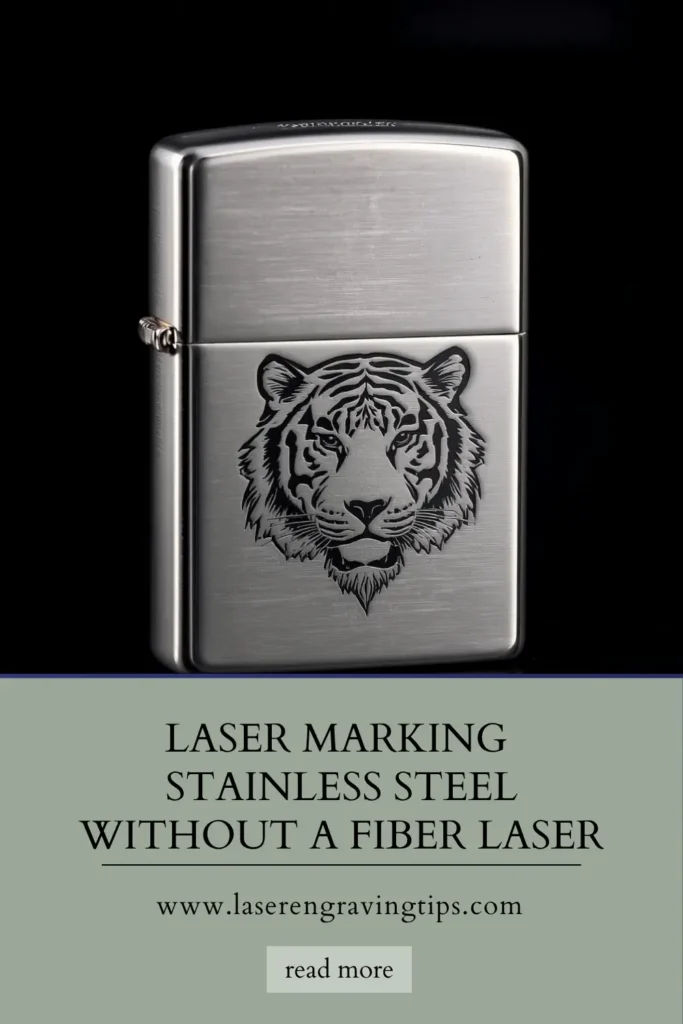
Can You Mark Stainless Steel Without a Fiber Laser?
Yes, you can successfully mark stainless steel without a fiber laser. While fiber lasers are the industry standard for metal engraving, other laser types can still create durable and professional-looking marks when combined with marking sprays or coatings.
The most common alternatives include:
- CO2 lasers with marking compounds
- Diode lasers with laser marking sprays
Each method has advantages depending on your budget, machine type, and engraving goals.
Why Marking Stainless Steel Is Difficult
Stainless steel reflects a large amount of laser energy, especially from CO2 and diode lasers. This reflective surface prevents standard laser beams from absorbing enough heat to create permanent marks easily.
That is why many non-fiber laser methods rely on special marking compounds or coatings that absorb laser energy and bond to the metal during engraving.
Proper focus, slower speeds, and higher power settings also help improve results.
Best Methods for Marking Stainless Steel
CO2 Laser With Marking Spray
A CO2 laser combined with a metal marking spray is one of the most effective non-fiber laser methods for stainless steel engraving.
These sprays create a dark coating that permanently bonds to the stainless steel surface during laser engraving. We recommend using OMTech Laser Marking Spray with your CO2 Laser.

- Laser Marking Spray: OMTech's laser marking spray’s innovative formula allows creation of high contrast, permanent black designs on bare metals with your 25W and above CO2 laser engraver, or more vivid designs with your fiber laser. Please note that the spray initially appears white but turns black after laser engraving
OMTech Laser Marking Spray is one of the easiest and most effective ways to mark stainless steel with a CO2 laser.
Since standard CO2 lasers cannot directly engrave bare metal well on their own, this spray creates a strong bonding layer that allows the laser to produce dark, permanent markings with excellent contrast.
One of the biggest reasons we recommend OMTech’s marking spray is the quality of the final mark.
After engraving, the spray turns into a deep black finish that stands out clearly on stainless steel, aluminum, brass, and other bare metals. This makes it ideal for personalized tumblers, jewelry, tools, tags, signs, and branded products.
The application process is also very beginner-friendly. The aerosol can uses a clog-resistant nozzle that sprays a thin, smooth, and even coating across the metal surface.
A consistent coating is extremely important for clean engraving results, especially when working with detailed logos or small text.
Another major advantage is the fast drying time. The spray dries in under five minutes naturally, or in about two minutes with warm air, which helps speed up workflow for batch production and small business orders.
Cleanup is simple as well. After engraving, the unused spray rinses off easily with water, leaving only the permanent laser-marked design behind. This helps reduce post-processing time and keeps finished products looking professional.
For hobbyists, small businesses, and makers using 25W or higher CO2 lasers, OMTech Laser Marking Spray offers an affordable and reliable way to create permanent stainless steel markings without investing in an expensive fiber laser system.
How It Works
First, clean the stainless steel thoroughly with isopropyl alcohol to remove oils and fingerprints. Then apply a thin, even coat of marking spray over the engraving area.
The laser heats the coating during engraving, causing it to bond to the metal surface. Once finished, the leftover residue can be wiped away, leaving behind a clean black mark.
Best CO2 Laser Settings
Settings vary by machine, but most users start with:
Setting | Recommended Range |
|---|---|
Speed | 200–400 mm/min |
Power | 70–90% |
Passes | 1–2 |
Always test on scrap material first before engraving final products.
Advantages of CO2 Laser Marking
CO2 lasers create sharp, high-contrast black marks that work well for logos, text, barcodes, serial numbers, and decorative designs. This method is popular for tumblers, knives, signs, and custom branding projects.
Using a Diode Laser For Marking Stainless Steel
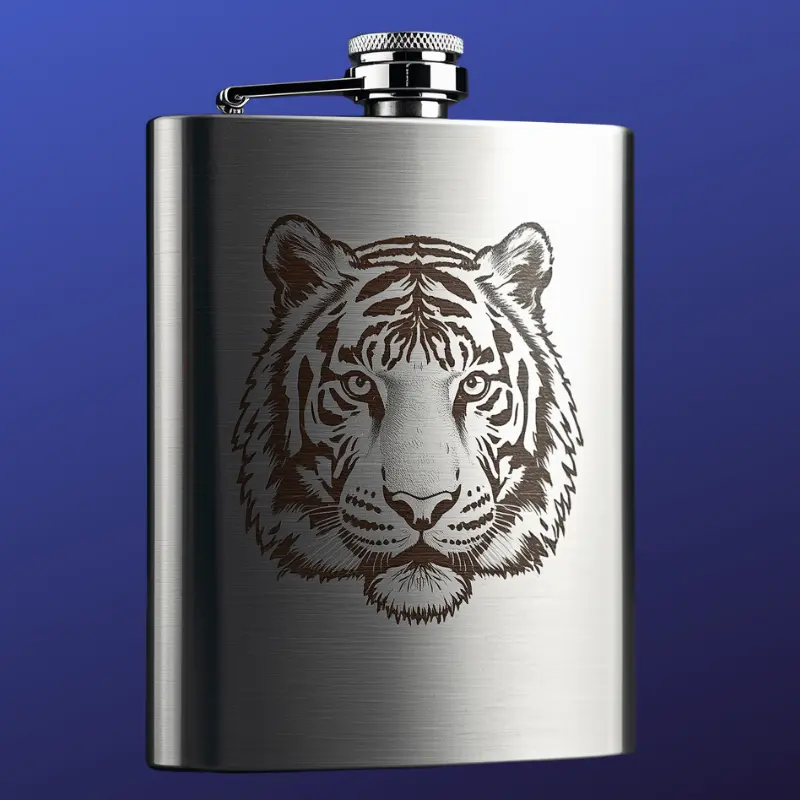
Diode lasers can also mark stainless steel, especially high-powered models between 15W and 40W.
However, diode lasers generally require slower speeds and multiple passes because they produce less energy than fiber lasers.
Diode Laser Techniques
Most diode users combine the laser with a marking spray or coating for better contrast and durability. Bare stainless steel is difficult for standard diode lasers to mark consistently because of its reflective surface.
We recommend using CRC 3084 Dry Moly Lube with your Diode Laser.

- CRC INDUSTRIES: A market leader that offers impeccably designed chemical solutions to maintain, protect and repair different marine, heavy-duty motor vehicles, industrial-grade engines, household tools and electrical equipment.

CRC 3084 Dry Moly Lube has become one of the most popular budget-friendly alternatives for marking stainless steel with a diode laser, especially for hobbyists and small businesses that do not own a fiber laser.
While it was originally designed as a dry lubricant, many laser users discovered it works surprisingly well as a metal marking coating for stainless steel and other metals.
One of the biggest reasons we recommend CRC Dry Moly Lube is affordability. Professional laser marking sprays like CerMark and TherMark can be expensive, especially for beginners experimenting with metal engraving.
CRC Dry Moly offers a much lower-cost option while still producing dark, permanent marks on stainless steel when paired with a diode laser.
The spray is also very easy to apply. It dries quickly, allowing users to prep multiple items at once for batch engraving. Applying two light coats yields the best results, producing a darker, more consistent finish than a single coat.
Another reason laser users like CRC Dry Moly is the final appearance. Instead of creating a glossy black coating, it often produces a darker etched-looking gray finish that many makers actually prefer because it looks more natural and industrial.
This works especially well for flasks, tools, tumblers, knives, tags, and personalized metal gifts.
Cleanup is relatively simple as well. After engraving, the excess coating can usually be removed using isopropyl alcohol and a soft cloth or paper towel. A second wipe with alcohol leaves the stainless steel looking polished and clean.
We recommend using Cleanaroo Isopropyl Alcohol 99.9% for the best results.

- All-Purpose Cleaning Agent and Solvent, High Purity & Quality
CRC Dry Moly also works well with higher-powered blue diode lasers that normally struggle to mark bare metal directly. Slower speeds, high power, and multiple passes typically give the best results.
Another advantage is accessibility. Unlike some specialized laser marking compounds, CRC Dry Moly is widely available online and often easier to find at automotive or industrial suppliers.
While it may not produce the same deep black finish as premium marking sprays, CRC 3084 Dry Moly Lube remains one of the best low-cost solutions for diode laser users wanting to mark stainless steel without investing in a fiber laser system.
Recommended Diode Settings
Setting | Recommended Range |
|---|---|
Speed | 50–150 mm/min |
Power | 90–100% |
Passes | 3–8 |
Multiple passes help build enough heat for permanent marking.
Best Uses for Diode Laser Marking Stainless Steel
Diode lasers work well for:
- Personalized tumblers
- Stainless steel tags
- Custom tools
- Nameplates
- Decorative artwork
While they are not ideal for deep engraving, they can still produce attractive surface marks.
Surface Preparation Tips for Laser Marking Stainless Steel
Preparing stainless steel properly before engraving greatly improves marking quality.
Clean the Surface Thoroughly
Use isopropyl alcohol or acetone to remove fingerprints, oils, and dust before engraving. Dirty surfaces often cause uneven marks.
Use Brushed Finishes When Possible
Brushed or satin stainless steel usually engraves more easily than mirror-polished metal because it reflects less laser energy.
Secure the Material Properly
Use magnets, clamps, or laser bed hold-downs to prevent movement during engraving. Even slight shifting can ruin alignment and detail.
Laser Marking Stainless Steel Common Problems and Fixes

Weak or Faded Marks
This usually means:
- Laser speed is too fast
- Power is too low
- Focus is incorrect
- Marking spray is uneven
Lowering speed and increasing power often improves contrast significantly.
Uneven Marking
Dirty lenses, incorrect focus distance, or contaminated metal surfaces can cause inconsistent engraving results.
Clean your lens regularly and double-check your focus before starting a project.
Spray Not Bonding Properly
If the marking compound wipes away completely after engraving, the surface likely was not cleaned well enough before applying the spray.
Safety Tips for Laser Marking Stainless Steel
Always use proper laser safety procedures when engraving metal.
Wear laser safety glasses designed for your laser wavelength and ensure your workspace has good ventilation or a fume extractor. Marking sprays can create fumes during engraving, especially in enclosed areas.
Avoid touching freshly engraved metal immediately after engraving because the surface can remain extremely hot.
Conclusion
You do not need a fiber laser to create high-quality stainless steel markings. CO2 lasers with marking sprays, and diode lasers with specialized coatings, can produce durable and professional-looking results.
For most hobbyists and small businesses, a CO2 laser with OmTech Marking Spray is one of the easiest and most reliable methods. Diode lasers also work well with Dry Moly Lube for lighter engraving projects.
With the right setup, settings, and surface preparation, you can successfully mark stainless steel even without a traditional fiber laser machine.
Frequently Asked Questions
Can a CO2 laser mark stainless steel?
Yes, but usually not directly. Most CO2 lasers require a marking spray or compound like OmTech Black Laser Marking Spray to create permanent marks on stainless steel. The laser bonds the coating to the metal surface during engraving.
Can a diode laser engrave stainless steel?
High-powered diode lasers can mark stainless steel when used with marking sprays or coatings. Bare stainless steel is difficult for standard diode lasers because the reflective surface does not absorb enough laser energy effectively.
What is the best marking spray for stainless steel?
Popular options include OMTech Laser Marking Spray, and CRC Dry Moly Lube. OMTech usually creates darker black marks, while Dry Moly Lube often produces a more etched-looking dark gray finish.
Are laser marks on stainless steel permanent without a fiber laser?
Yes. When done correctly, the marks created using CO2 or diode lasers with marking compounds are highly durable and resistant to fading, scratching, and normal wear. Proper surface cleaning and laser settings help improve durability.
Why is my stainless steel mark fading or wiping off?
This usually happens because the laser settings are too weak, the metal surface was not cleaned properly, or the marking spray was applied unevenly. Slower speeds, higher power, proper focus, and multiple light coats of marking spray often improve results significantly.